Avery Müller · 11 September 2026
Community-Led Color Tracking Programs Uncover Seasonal Patterns in Mosshaven Moss Habitats
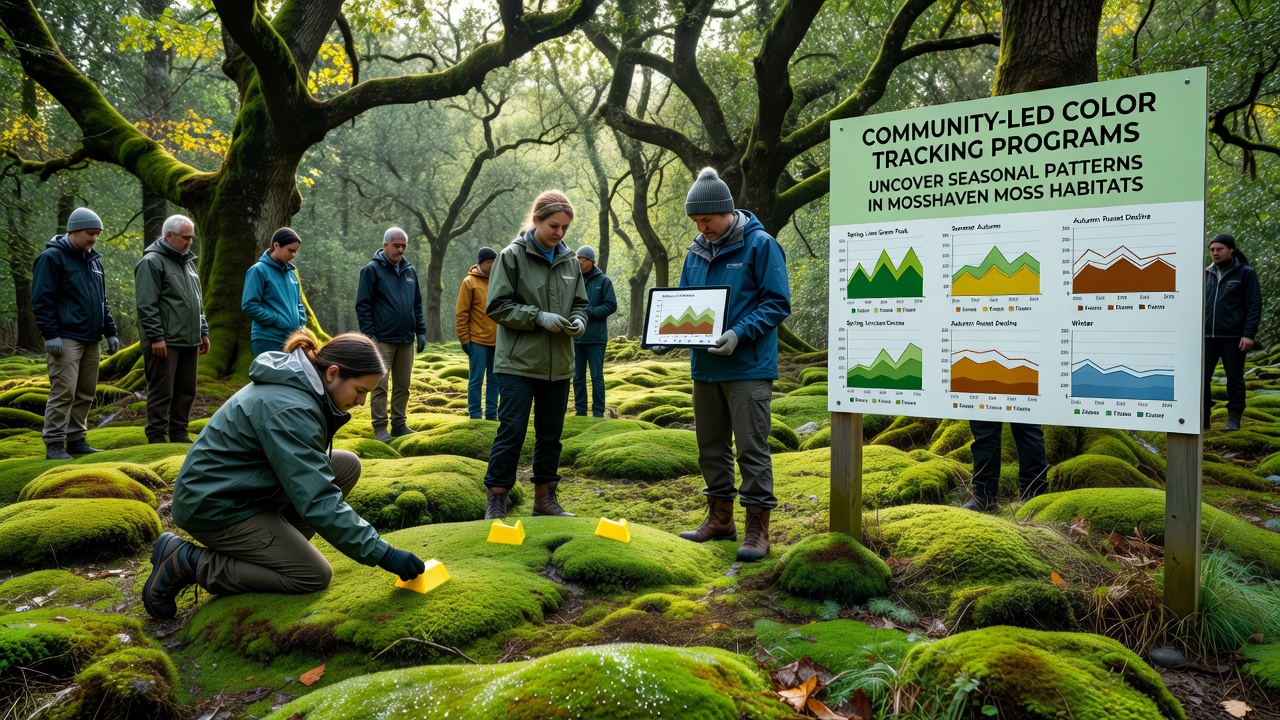
Community volunteers across Mosshaven have organized color tracking initiatives that monitor moss habitats through consistent seasonal observations, and these efforts now generate datasets spanning multiple years of field records. Participants record hue variations in species such as those found on slopes and valley floors while they note temperature, moisture levels, and light exposure at each site. Data collection occurs on scheduled intervals that align with spring green-up, summer stabilization, autumn shifts, and winter dormancy phases.
Program Structure and Methods
Local groups coordinate with regional ecologists to standardize color charts and digital capture protocols, which ensures comparable entries from different zones within the Mosshaven area. Volunteers photograph designated plots at fixed times of day and upload images to shared repositories where software assists in quantifying RGB values and dominant tones. These methods allow researchers to identify correlations between color transitions and environmental variables without relying on subjective visual estimates alone.
Training sessions cover proper site marking, equipment calibration, and data entry procedures so that new participants maintain consistency with established records. Programs expanded their reach in September 2026 when additional trailheads opened for public monitoring days and online portals began accepting submissions from remote contributors. Figures from the network show participation rising from 120 active trackers in 2023 to over 340 by late 2026.
Seasonal Color Trends Identified
Analysis of compiled records reveals distinct patterns tied to rainfall distribution and daylight duration. Moss beds in lower elevations display earlier shifts toward deeper greens during spring months while higher slope communities retain lighter tones until later in the season. Autumn brings widespread yellowing and browning across most monitored plots, yet certain sheltered depressions maintain stable coloration longer than exposed ridges.
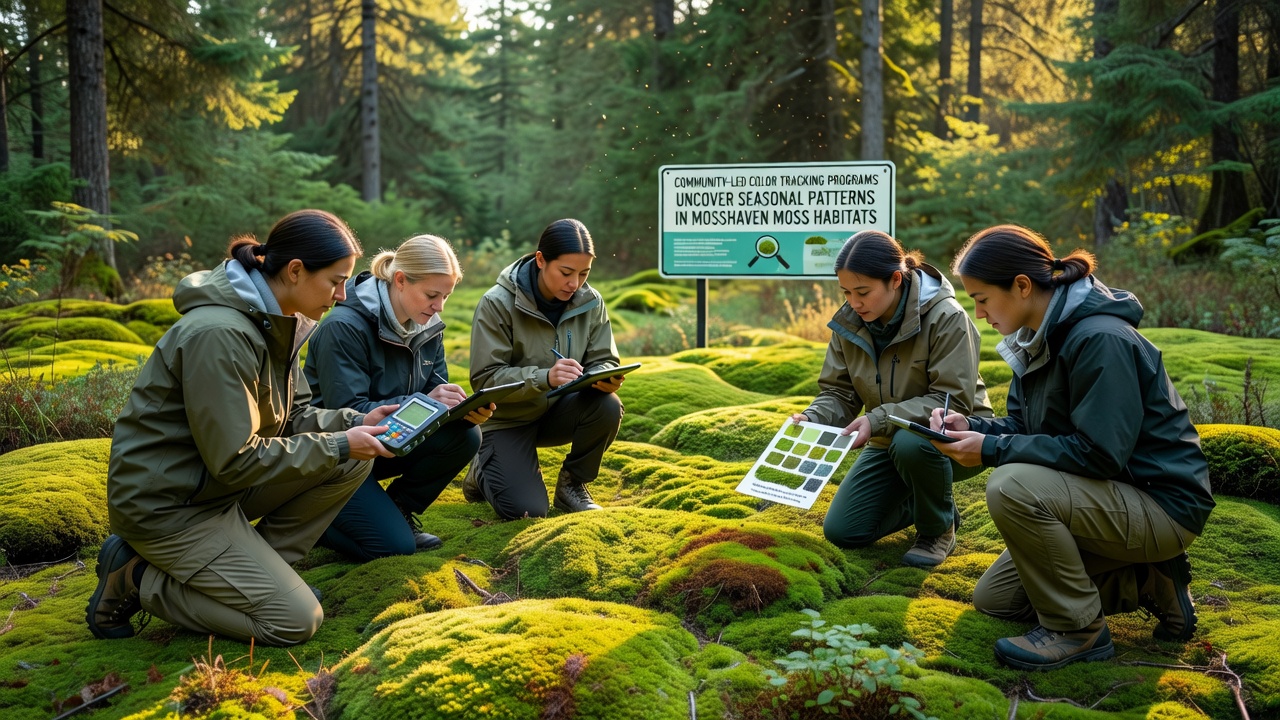
Winter observations document minimal color change once dormancy sets in, although brief thaws can trigger localized brightening that reverses quickly. Researchers note that these cycles repeat reliably across the dataset, which supports predictive models for habitat response under changing climate conditions. One study coordinated through the network compared 2024 and 2025 entries and found a two-week advance in spring coloration onset during the warmer year.
Data Applications and Collaborations
Collected information feeds into broader ecological assessments that evaluate habitat resilience and guide restoration priorities. Government agencies such as Environment and Climate Change Canada have referenced similar volunteer monitoring frameworks when designing national biodiversity surveys. Academic teams from institutions in Australia and the European Union have requested access to Mosshaven datasets for cross-regional comparisons of bryophyte responses.
Local land managers use the seasonal maps to time trail maintenance and visitor restrictions that minimize disturbance during vulnerable color transition periods. Schools incorporate simplified versions of the tracking protocol into science curricula, which introduces students to field methods and data interpretation through direct observation.
Conclusion
Community-led color tracking continues to expand the available record of Mosshaven moss habitats and supplies verifiable seasonal patterns that support both scientific inquiry and practical management decisions. Ongoing submissions from September 2026 onward will extend the timeline and strengthen trend detection across additional annual cycles.