Sage Butler · 6 November 2026
School Partnerships Integrate Moss-Based Data into Atmospheric Studies in Protected Regions
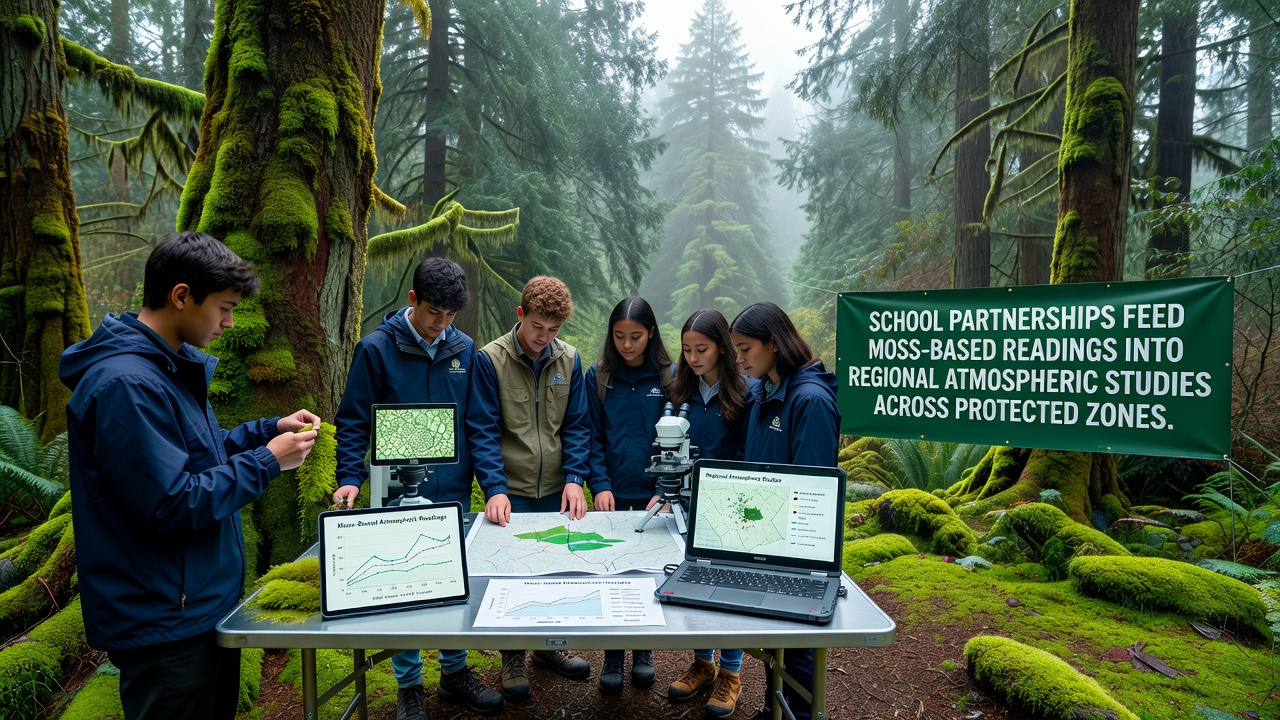
Schools across several regions have established ongoing partnerships with research teams to supply moss-derived readings that support broader atmospheric investigations in protected zones, and these collaborations have expanded steadily since early monitoring efforts began. Data from bryophyte samples collected by student groups now feed into regional models that track air quality shifts, pollutant dispersion, and climate-related changes across safeguarded forest and wetland areas.
Programs typically involve scheduled field sessions where participants learn standardized collection methods, then transport specimens to partner laboratories for chemical analysis, while researchers cross-reference the results with satellite imagery and ground sensors already deployed in the same zones. The approach allows schools to contribute measurable inputs without requiring advanced equipment on site, and the resulting datasets have grown in both volume and geographic coverage.
Program Structure and Data Flow
Each participating school receives training kits and protocols developed jointly by educators and atmospheric scientists, after which classes conduct monthly sampling rounds in designated protected areas under supervised conditions. Moss specimens undergo laboratory processing that measures heavy metal concentrations, nitrogen deposition levels, and isotopic signatures, then these values integrate directly into existing regional databases maintained by government and academic partners.
One district reported that student-collected samples from 2024 onward now constitute approximately 18 percent of the total moss readings used in its atmospheric modeling platform, and similar proportions appear in neighboring jurisdictions that adopted the same framework. The data pipeline routes findings through secure portals so that updates appear in near real time for researchers who adjust predictive models accordingly.
Geographic Expansion and November 2026 Milestones
By November 2026 several new sites in the northern and western protected zones had joined the network, bringing the total number of active school monitoring locations above forty. Expansion followed the release of updated mapping tools that helped coordinators identify gaps in existing coverage, and participating institutions responded by aligning their curricula with the additional field requirements.
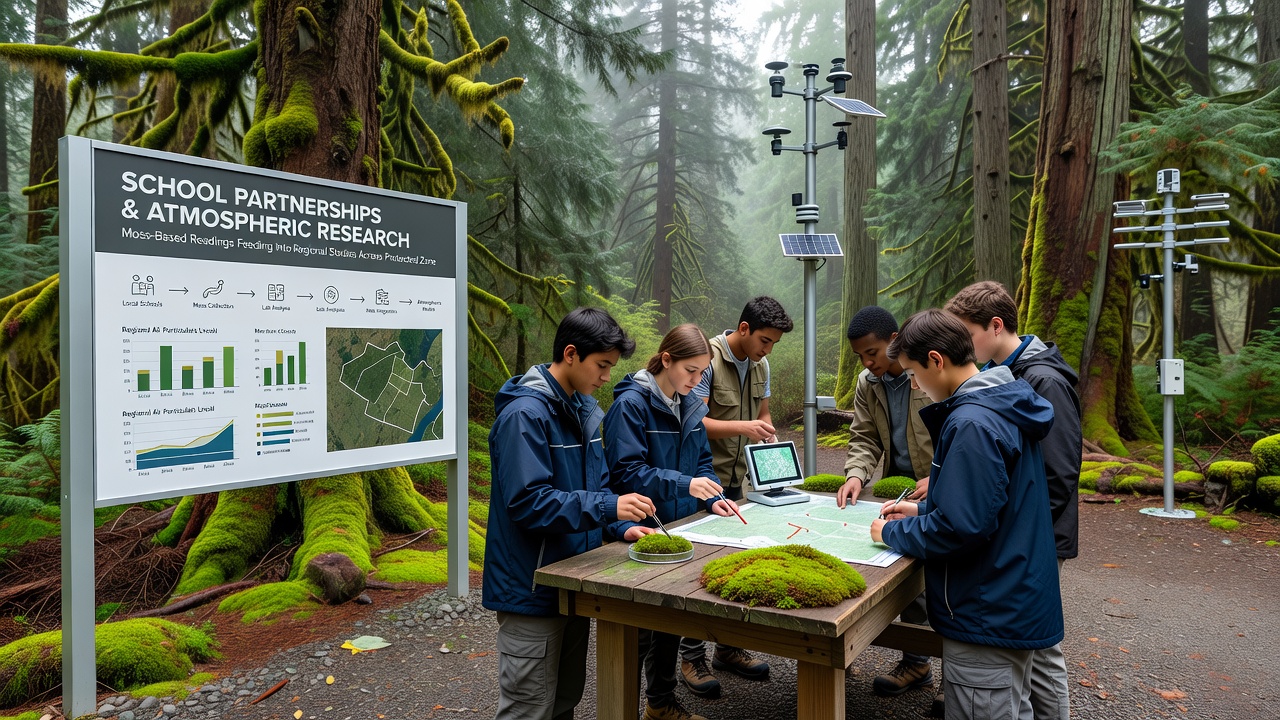
Coordination meetings held that month confirmed that moss-based indicators from the newest sites aligned closely with readings from established stations, which strengthened confidence in the overall dataset. Regional agencies noted that the added data points improved resolution for models forecasting pollutant movement during seasonal wind shifts.
Supporting Research Institutions and Standards
Academic partners supply quality-control benchmarks drawn from long-term studies at multiple universities, and these benchmarks ensure that school-generated samples meet the same analytical thresholds applied to professional collections. Standards include duplicate sampling requirements, chain-of-custody documentation, and calibration checks against certified reference materials.
Observers note that the distributed nature of the program has reduced travel costs for research teams while simultaneously increasing sample density across terrain that would otherwise receive infrequent visits. The resulting denser dataset supports finer-scale mapping of atmospheric deposition patterns within each protected zone.
Integration with Broader Monitoring Networks
Moss readings supplied through school channels complement continuous air-sampling stations operated by national agencies, and analysts combine both streams to validate trends identified by either method alone. When discrepancies arise, teams schedule targeted follow-up collections that often resolve questions about localized versus regional influences.
Figures from Environment and Climate Change Canada indicate that integrated moss and instrumental datasets have improved detection of incremental changes in deposition rates across comparable protected landscapes. Similar approaches appear in reports issued by the European Environment Agency, where educational contributions supplement professional networks in several member states.
Training and Curriculum Alignment
Teachers incorporate data interpretation exercises into science units so that students examine how individual sample results connect to larger atmospheric questions, and guest researchers visit classrooms to explain model outputs derived from the collective dataset. The curriculum alignment helps maintain consistent participation rates across academic years.
Schools also maintain digital logs that record environmental conditions at each collection site, and these metadata files accompany the physical specimens to the laboratory, which allows analysts to account for variables such as recent precipitation or temperature extremes when interpreting chemical measurements.
Conclusion
School partnerships have become a recognized channel for delivering moss-based atmospheric readings that support regional studies in protected zones, and the framework continues to scale through standardized protocols, curriculum integration, and secure data pipelines. Ongoing expansion through 2026 has added new sites while preserving data quality, which in turn strengthens the resolution of models used by researchers and agencies responsible for safeguarding these areas.