Avery Müller · 25 September 2026
Schools Across Mosshaven Collaborate with Experts to Explore Local Moss Ecosystems
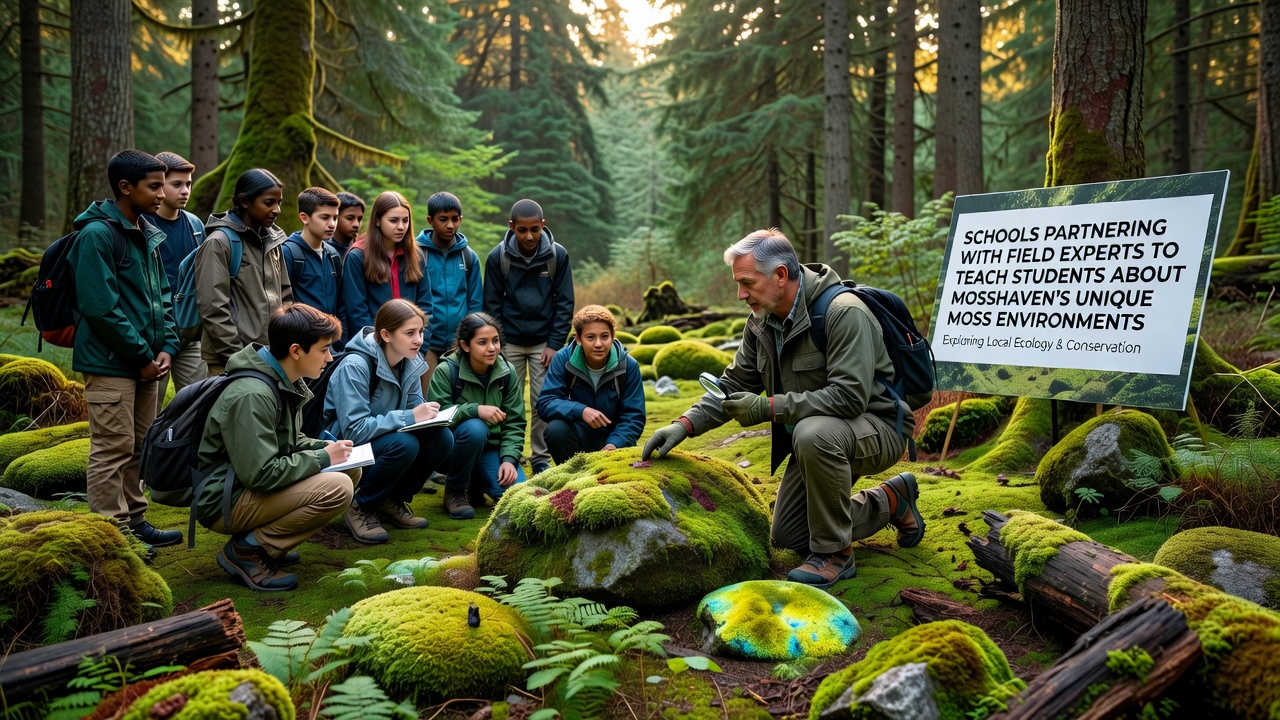
Programs pairing local schools with field specialists have expanded throughout Mosshaven since the early 2020s, and these efforts now deliver structured lessons on the area's distinctive moss habitats. Classes visit sites where bryophytes thrive in microclimates shaped by elevation, moisture gradients, and canopy cover, while experts demonstrate sampling techniques and species identification in real time.
Program Structure and Curriculum Integration
District coordinators schedule sessions that align with state science standards, so middle and high school students combine classroom modules on plant physiology with outdoor fieldwork; specialists from regional ecology groups lead these outings and supply equipment such as hand lenses, moisture meters, and GPS units for mapping patches. Lessons cover how mosses anchor soil on slopes, retain water during dry spells, and support micro-invertebrate communities, and students record data that contributes to ongoing habitat inventories maintained by the Mosshaven Ecology Center.
September 2026 marks the start of an expanded pilot that adds virtual-reality walkthroughs of canopy layers for schools without easy trail access, and participating teachers receive updated lesson kits that include laminated field guides and digital data-logging templates.
Field Methods Taught by Specialists
Experts demonstrate quadrat placement along transects, teach students to measure relative humidity at ground level, and explain how to distinguish acrocarpous from pleurocarpous growth forms without disturbing colonies. Participants log findings in shared databases that track seasonal changes in cover percentage and sporophyte production, and these records feed into broader monitoring projects run by university partners.
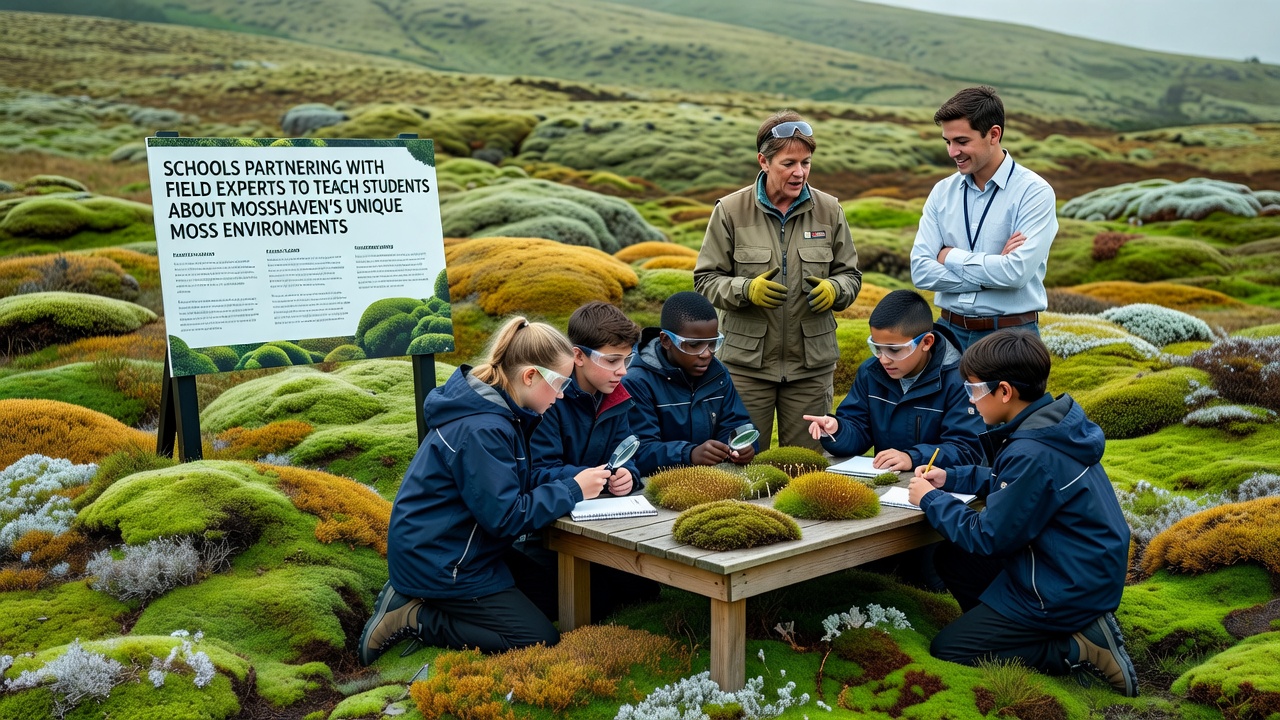
One district reported that students collected over 1,200 data points during the 2025 field season, and the resulting maps highlighted corridors where moss continuity supports downstream water retention. Teachers note that repeated site visits allow classes to observe succession after small-scale disturbances such as trail maintenance or windthrow events.
Partnership Roles and Resource Sharing
Local conservation districts supply permits and liability coverage, while universities contribute laboratory space for microscopic examination of leaf structures and spore counts. Field experts often rotate among schools, which keeps instruction consistent and allows specialists to refine explanations based on student questions from previous groups. Equipment pools managed by the Mosshaven Ecology Center include digital microscopes and portable weather stations that travel between sites.
Community volunteers trained in basic bryophyte identification assist during peak visit weeks, and their involvement frees specialists to focus on advanced topics such as nutrient cycling mediated by moss-associated cyanobacteria. Schools publish annual summaries of student-collected data on district websites, which creates a public record of habitat conditions across multiple elevations.
Student Outcomes and Data Contributions
Assessment rubrics measure both content mastery and field-skill accuracy, and pre- and post-program surveys show gains in students' ability to identify common genera such as Polytrichum and Dicranum. Several classes have presented findings at regional science fairs, and a subset of projects has been incorporated into larger studies examining moss responses to changing precipitation patterns documented by regional weather stations.
Research from the University of British Columbia's bryophyte laboratory indicates that student-collected moisture data can align closely with automated sensor readings when protocols are followed, which supports continued use of classroom programs in long-term monitoring. The collaboration model also introduces career pathways in ecology and environmental science, as specialists discuss their own training during site visits.
Conclusion
Continued coordination between Mosshaven schools and field experts sustains direct observation of moss environments while generating usable datasets for regional ecology projects. The structure relies on shared resources, aligned curricula, and scheduled field sessions that keep lessons current through September 2026 and beyond.